
Peabody Essex Museum Visit
The East India Marine Hall
By Lara Miller
I recently visited Salem, Massachusetts, and the newly-renovated East India Marine Hall at the Peabody Essex Museum. The East India Marine Hall is celebrating its 200th year, having been established by the East India Marine Society. This society was founded in Salem in 1799 by a group of seafarers, all of whom had “navigated the seas beyond the Cape of Good Hope or Cape Horn.” [i] These founders soon established a museum dedicated to displaying items and “curiosities” from their travels, both near and far. Via a later merger, the East India Marine Hall became the Peabody Essex Museum, but much of the hall has retained its original purpose as the museum itself has grown over time.
As I often do, I couldn’t help but think as I wandered through the exhibit of how integral the historic trades and crafts were to the items found within. Here are a few of my favorite items displayed:
A stone axe head, attributed to an Indigenous artisan on the coast of current-day Massachusetts or Maine and dated to 1,600-3,000 years old.
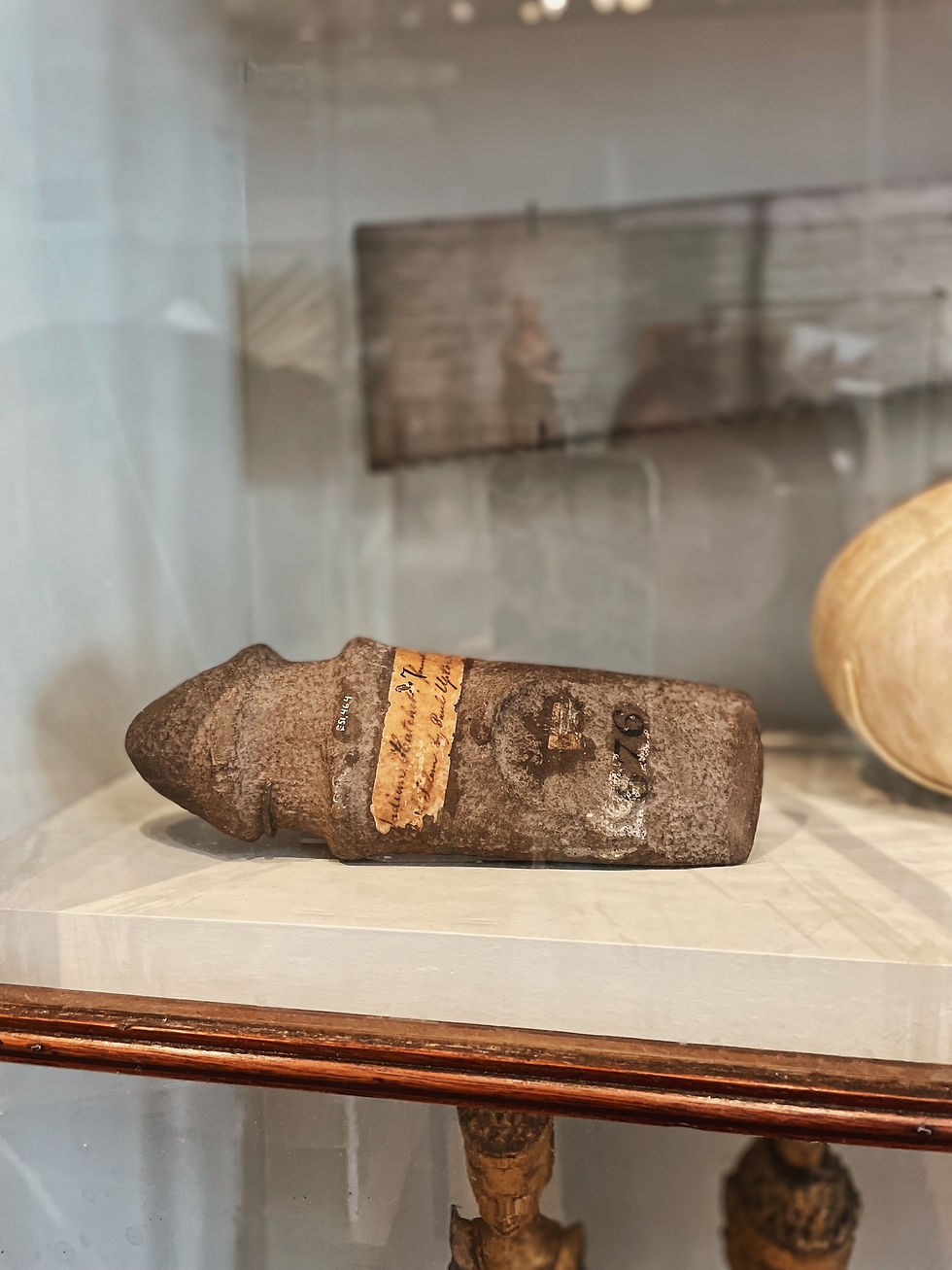
A tomahawk, “from among 3,000 which were taken by a New England privateer in a French vessel bound to Quebeck, during the old French war” (quote taken from the original donor, Renee E. Watkins, in 1827). Dated to around 1746.

A decorative box made from birchbark, wood, porcupine quills, spruce root, and dye. It was crafted by a Mi’kmaq artist in present-day Maine or the Canadian Maritimes in the early 1800s.

An intricate pouch with an embroidered Thunderbird symbol, made from buckskin, porcupine quills, tin, and deer hair. It was likely made by an Anishinaabe, Dakota, or Odawa artist in the upper Mississippi or Minnesota Rivers in the late 1700s or early 1800s.

To me, these items serve as a reminder that the historic trades and crafts have long encompassed both the utilitarian/useful and the beautiful/creative. These are only an incredibly small fraction of the many items currently displayed in the East India Marine Hall, and I highly recommend a visit to see all of them for yourself. For more information about the Peabody Essex Museum and/or the East India Marine Hall, you can visit www.pem.org.
[i] Walter Muir Whitehill (1949). East India Marine Society and the Peabody Museum of Salem; a Sesquicentennial History. Salem, Mass.: Peabody Museum.
Comments